
Touch Screen Casino Display : More Than Just a Pretty Interface – Casinos have always been hubs of excitement, innovation, and visual appeal. From the ornate carpets to the ringing bells of slot machines, every element is designed to captivate. However, in recent years, one technological advancement has begun to redefine the entire gaming floor—the touch screen display. What was once considered a flashy upgrade has now become a foundational component of modern casino operations and player experience.
Touch screen casino displays are no longer just decorative or superficial. They play a vital role in how players interact with games, how casinos manage their systems, and how new revenue opportunities are generated. With the rise of digital-first experiences and the increasing demand for personalization, these interfaces are transforming from passive screens to dynamic control centers that shape the future of gaming.
The Evolution of Casino Display Technology
From Mechanical to Digital: A Brief History
The transformation from mechanical to digital systems marks one of the most significant shifts in casino history. Traditional slot machines were operated manually using levers and physical reels. While they had their charm, these machines were limited in terms of features, visuals, and engagement. The introduction of microprocessors in the 1980s marked the beginning of electronic gaming. Machines evolved to include LED displays and digital controls.
As technology advanced, so did player expectations. The 2000s ushered in video slot machines, which offered higher resolution graphics, sound effects, and more interactive bonus rounds. Yet, the real revolution came with the implementation of touch screen technology. By removing mechanical buttons and replacing them with intuitive touch panels, game designers unlocked a new level of creative freedom and user interactivity.
Rise of PCAP and Capacitive Technology
The core driver behind the success of modern touch screen casino displays is Projected Capacitive (PCAP) touch technology. Unlike resistive touch screens that rely on pressure, PCAP utilizes the electrical properties of the human body to detect touch with incredible precision. It supports multi-touch gestures, allowing for advanced interactions like pinch-to-zoom or swipe navigation.
PCAP displays are extremely durable, scratch-resistant, and offer a seamless edge-to-edge glass surface that enhances both aesthetics and hygiene. In casino environments, where machines run 24/7 and face high foot traffic, this robustness is essential. Capacitive touch screens can also be integrated with anti-glare coatings and optical bonding to maintain visibility in brightly lit settings, ensuring an uninterrupted user experience.
Why Touch Screen Displays Are More Than Just Attractive
Enhanced User Experience and Engagement
Touch screen casino displays elevate the player experience by making interactions more intuitive, immediate, and visually engaging. Players can navigate menus, select games, place bets, or claim bonuses—all with the ease of a finger tap. This convenience reduces friction and keeps players immersed in the game, rather than distracted by outdated interfaces or complicated controls.
Moreover, touch screens allow for dynamic content. Game designers can integrate high-definition graphics, animations, and audio that respond to player actions in real time. This creates a heightened sense of immersion and emotional connection, which encourages longer play sessions and more frequent returns.
Personalization is another benefit. Some systems enable players to create profiles, save preferences, or access loyalty rewards, making each interaction feel tailored. This level of customization fosters player satisfaction and brand loyalty, positioning touch screen displays as more than just tools—they become the heart of the gaming experience.
Improved Game Variety and Accessibility
Traditional machines are typically designed to host a single game, which limits variety and can lead to cluttered floors filled with redundant units. Touch screen displays solve this by allowing multi-game functionality on a single screen. With a few taps, players can switch from poker to roulette or from video slots to keno. This keeps players engaged and makes the most of the available floor space.
Accessibility is also vastly improved. Touch interfaces can be adjusted to support different languages, large fonts for visually impaired users, and color schemes for better contrast. This inclusivity broadens the demographic reach of the casino, ensuring that both novice and experienced players can enjoy the games comfortably.
Additionally, touch displays can offer tutorial modes or guided experiences, which are particularly helpful for first-time visitors. By lowering the barrier to entry, casinos can attract a wider audience and ensure that everyone feels confident and welcome.
Real-Time Feedback and Data Display
One of the most powerful aspects of touch screen casino displays is their ability to deliver real-time feedback. Whether it’s notifying a player of a jackpot win, prompting them with a bonus round, or showing the outcome of a hand, the display becomes a constant source of immediate and meaningful information.
Real-time data isn’t just useful for the player—it’s also a goldmine for casino operators. Displays can be programmed to show personalized promotions, loyalty point updates, or targeted offers during gameplay. This level of engagement deepens the connection between player and casino while maximizing opportunities for cross-selling and up-selling.
Some advanced systems also integrate with analytics tools that monitor player behavior and machine performance. This allows casinos to make data-driven decisions regarding machine placement, game popularity, and revenue optimization—all visualized and managed through the same touch interfaces.
Operational Benefits for Casino Owners and Staff
Streamlined Maintenance and Software Updates
Touch screen displays contribute significantly to operational efficiency. Since most modern systems are software-based, updates can be rolled out remotely and in real-time, eliminating the need to physically access each machine. This saves time, reduces labor costs, and ensures consistency across the gaming floor.
Mechanical components like buttons are prone to wear and require frequent replacement. Touch screens, especially PCAP models, have fewer moving parts, making them more durable and less susceptible to damage. This translates to lower maintenance costs and fewer machine downtimes—both crucial factors in maintaining steady revenue.
Furthermore, issues such as calibration, diagnostics, and software troubleshooting can be handled remotely through centralized control systems. This reduces the workload on technical staff and allows for faster issue resolution.
Space Optimization and Modular Designs
Floor space in casinos is at a premium. Touch screen displays help maximize this space by consolidating multiple games into a single machine. This enables casinos to offer a broad selection of gaming options without overcrowding the area. Multi-game terminals are especially beneficial in smaller venues or lounges where space is limited.
Modular design is another advantage. Manufacturers build most modern gaming units to allow easy replacement of individual components—whether it’s the monitor, CPU, or card reader. This modular design allows technicians to perform upgrades or repairs without replacing the entire machine. It is resulting in significant cost savings over time.
Casinos can also adapt their layout more flexibly. As gaming trends shift or new regulations emerge, operators can reconfigure the gaming floor with minimal disruption—all thanks to the plug-and-play nature of touch screen technology.
Secure and Contactless Transactions
Security is paramount in any casino environment, and touch screen systems can play a pivotal role in enhancing both data security and transactional safety. These displays can integrate with payment systems, biometric scanners, and loyalty card readers to ensure every interaction is traceable and secure.
Contactless features such as NFC (Near Field Communication), QR code scanning, and mobile wallet compatibility reduce the need for cash handling or physical ticket redemption. This not only improves hygiene—an important factor in the post-pandemic era—but also accelerates transaction speeds.
Some systems even include facial recognition and fingerprint scanning to verify player identity, prevent fraud, and comply with responsible gaming regulations. The versatility of modern touch displays makes this seamless blend of security and convenience possible.
Touch Screen Casino Display – Applications Across the Casino Floor
Slot Machines and Video Gaming Terminals (VGTs)
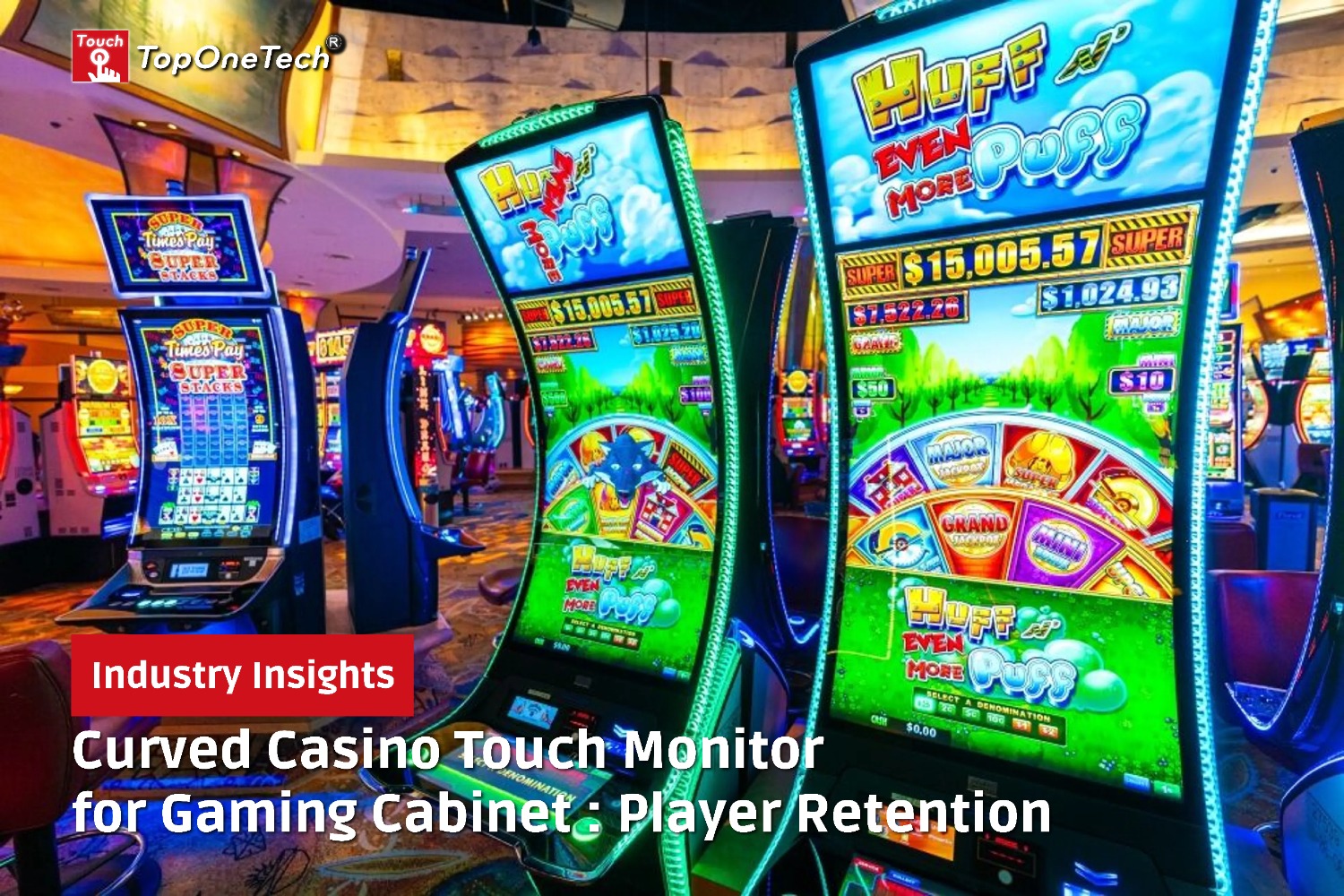
Slot machines are the centerpiece of any casino floor, and touch screen displays have completely transformed how these machines operate and attract players. With larger, brighter, and more interactive screens, slot machines now offer immersive experiences that include narrative-driven games, themed bonus rounds, and 3D animations.
Touch displays allow for dynamic bet placement, auto-play configurations, and instant access to game instructions—all within a clean and responsive interface. Many newer slot machines feature dual or triple screens, where one screen handles the gameplay and others display player rewards, bonus games, or advertisements.
VGTs benefit similarly. These machines, often found in non-traditional gaming venues like bars or restaurants, use touch screen interfaces to deliver casino-style games in a compact, convenient format. Their adaptability and ease of use make them ideal for decentralized gaming setups.
Electronic Table Games (ETGs)
ETGs combine the excitement of traditional table games with the efficiency of digital platforms. Each player has a personal touch screen that replicates the experience of a live dealer game, complete with cards, chips, and betting options. The digital interface eliminates human error, speeds up gameplay, and enables players to play multiple games simultaneously.
Touch screen displays in ETGs also facilitate features like side bets, game tutorials, and multi-hand play. They provide detailed statistics, hand history, and trend data that enhance strategic decision-making for serious players.
For operators, ETGs reduce staffing needs while increasing game capacity. A single croupier or virtual dealer can oversee a dozen players, all using their individual touch screen interfaces.
Kiosks and Self-Service Terminals
Kiosks have become indispensable on casino floors. Whether it’s for ticket redemption, sports betting, loyalty registration, or customer feedback, these self-service terminals rely heavily on reliable and responsive touch screen displays.
Kiosks equipped with touch technology streamline the customer journey by reducing wait times and freeing up staff to focus on high-touch services. Modern kiosks often include additional features such as receipt printers, ID scanners, and mobile integration—all managed via the touch interface.
Their scalability and versatility make kiosks a vital component of any modern casino. It is capable of handling diverse functions while maintaining a consistent and user-friendly interface.
Design Considerations for Touch Screen Casino Display
Touch Screen Casino Display – Brightness, Contrast, and Anti-Glare Features
Flashing lights, reflective surfaces, and high ambient lighting fill casino environments, all of which can affect display visibility. To maintain readability, touch screen casino displays must offer high brightness levels, adjustable contrast ratios, and anti-glare coatings.
Some displays use optical bonding, which eliminates the air gap between the display and the touch layer. It is enhancing image clarity and reducing reflection. Others feature automatic brightness adjustment that responds to changes in ambient light. It is ensuring the screen is always easy to read regardless of its placement on the floor.
These visual enhancements contribute to a more comfortable gaming experience and reduce eye strain during long play sessions.
Touch Screen Casino Display – Durability and 24/7 Operation
Manufacturers must build casino touch displays to endure constant use, unlike consumer-grade screens. They need to withstand scratches, impacts, moisture, and extreme temperatures—all while running non-stop for years.
Manufacturers use industrial-grade materials, such as reinforced glass and metal enclosures, to make high-quality touch screens. They often carry IP ratings that certify protection against dust and liquid ingress, making them suitable for food-and-drink-heavy environments.
The casino industry demands 24/7 reliability, and engineers design the right touch screen to meet that need without compromise.
Touch Screen Casino Display – Customization and Branding
Casinos build atmosphere and identity, and manufacturers can customize touch screen displays to support that brand image. From the physical design—such as custom bezels and LED lighting—to the software interface, casinos can tailor every aspect of the display to match their aesthetic.
Manufacturers can skin user interfaces with custom graphics, color schemes, and logos. They can also adjust gameplay features to align with promotional events or themed nights. This customization fosters a cohesive, branded experience that stands out in a competitive market.
Some casinos also use lighting effects and animations triggered by gameplay events (like a big win) to create excitement and draw attention to the machine. It is effectively turning every touch screen into a mini billboard.
Choose Top One Tech as Your Trusted Touch Screen Casino Display
As a leading manufacturer of touch screen solutions, Top One Tech specializes in designing and producing high-performance displays for the gaming industry. Our product line includes PCAP touch monitors, open frame screens, and custom configurations built specifically for slot machines, gaming tables, and kiosks.
We understand the demands of the casino environment—durability, responsiveness, clarity, and long-term reliability. We deliver displays that meet and exceed those expectations. Our engineering team collaborates directly with clients to develop OEM and ODM solutions that incorporate advanced technology while reflecting the clients’ brand aesthetics and meeting functional requirements.
Whether you’re outfitting a new casino or upgrading your current setup, Top One Tech offers the technology, expertise, and support to bring your vision to life. Partner with us and experience the power of precision-engineered touch solutions that elevate every corner of your gaming floor.
Top One Tech can customize Touch Screen Casino Display and we can also customize The Casino Gaming Machine Metal Cabinet, crafted by our subsidiary company, Top One Tech Metal, specially made for your application scenarios.
Don’t hesitate to contact us for further assistance :
Whatsapp/Call us at : +86 13631610695
Email : sales@toponetech.cn
See Also : Our Wide Range of Touch Screen Casino Display Products